Showing posts with label community. Show all posts

Saturday, 20 March 2021

London's Calling 2021


London's Calling 2021 was an all remote affair - the 2020 edition started this trend, but there was a small in person presence as the physical facilities were all in place. A sound decision this year, as we are currently under restrictions that mean we can meet one person for exercise/coffee in a public open space. I guess we could all have our own mini-event where two of us get together and present a talk to each other, but quite hard to scale I feel.

It was a very different day for me - typically I'd be up around 05:30 to walk the dogs before catching the bus to the station for the trip up to London. I still did the walk, but with an extra hour or two in bed. At 07:30 rather than wandering around near The Brewery waiting for it to open, I was sat on the sofa refreshing the Attendify app waiting for it to open! The commute was a lot easier though, and I could spend most of the day barefoot which I'd be reluctant to try in the real city. Lunch was a lot easier to come by as well - hardly any queueing in my kitchen, although the menu wasn't as varied.

The sessions were pre-recorded and replayed as live with the speaker on hand in the chat to answer questions. This is definitely my preferred route for these kind of events - while I like the "anything can happen" excitement of presenting live, home broadband connections just aren't solid enough to rely on for 50+ sessions across a whole day. Mine decided to drop just after I joined the BrightGen sponsor room and it took me a couple of minutes to reconnect via my phone - I suspect I'd have lost most of my audience during that time.  You don't get a lot of questions as the schedule is pretty compressed and most people are jumping on to the next session rather than sticking around to chat, but remember that all of us speakers are contactable via the usual channels after the event. The deck from my talk is available on SlideShare.

The keynote was, as always, thought provoking. The key takeaway for me was that I'm Batman! Or all of us attendees are Batman. Or more accurately, the skill sets that the attendees have will be key to the new normal. A talk will always go down well when the audience are told they are super heroes. 

A common thread between physical and virtual events is not being able to make most of the sessions that look interesting, and this was no exception. Typically half a dozen sessions on at any one time meant that I had to make my decisions based on whether I wanted to ask any questions. The organisers have done a sterling job to make the sessions available immediately after the event, so I'll be catching up over the coming week.

The bit I really missed was the networking - there's an element of this through the Attendify activity feed and the sponsor rooms, but nothing like the in person experience of bumping into someone in a corridor that you haven't seen for ages and hearing about what they've been up to. London's Calling brought this into sharp relief as I've known a lot of the attendees for years but don't catch up with them in person that much, even when there isn't a pandemic.

The other part this is very difficult to replicate is the after party, although if we'd had one of those I might not be sitting here writing this post at 07:00 on Saturday morning!

There's definitely an upside to the all remote approach - no travel means the opportunity to speak for those who don't have the spare funds to jet around the world. Likewise no visas means individuals aren't at the mercy of government departments, and I hope that when things are back to "normal" next year(?) some aspect of this will be retained for a hybrid event - maybe a virtual room or two so the physical audience can listen to virtual speakers, and a virtual ticket so that people who can't get over to London can still get access to the content and join in via the app. I'll be watching what happens with great interest.

The event might have been a little different in its location and execution, but once again it was awesome. Kudos to the organisers, all volunteers let's not forget, for showing some of the bigger events how things should be done. One pure virtual is enough for me though, and I can't wait for next year when we'll (hopefully) be able to get together in person.

Subscribe to my Substack

Saturday, 2 May 2020

Speaker Academy is back - and it's twice as good!


We're Back!

A few years ago, Jodi Wagner and I started up a community effort called Speaker Academy, after we noticed that most of the events that we attended had the same faces speaking each time. As I was one of those faces I didn't necessarily see it as a bad thing, but I know it's possible to have too much of a good thing!

We figured that a lot of people liked the general idea of raising their profile and sharing their experience, but hated the thought of being up on stage in front of an audience. That's pretty much how I felt about it when I started public speaking many years ago - I could see all the upsides and very much wanted those, but the potential pitfalls seemed overwhelming. I got past this by forcing myself to speak whenever the opportunity arose, and reading lots of articles about conquering your fear of failure, but it wasn't the smoothest road to travel.

So we offered candidates the chance to take advantage of our experience through a multi-week course, with a mix of presentations, hands on exercises, and dry runs of real talks with feedback. Our candidates used to graduate by presenting at a special meetup of the London Salesforce Developers, but since we went online and are pulling in people from Europe and beyond, we now ask candidates to speak at an event of their choosing and send us some pictures to prove it happened!

We've run a couple of iterations online, and each time had to rework the curriculum a little. It turns out people are much more comfortable sat in their own home in front of a screen, so we had to figure out new ways to take them out of their comfort zone. The expectations of event organisers also changed, so we had to increase our focus on things like writing an abstract.

Double Trouble!


We also ended up on different continents when Jodi moved back to the US, which made the logistics more challenging. For the last round, Jodi very kindly gave up an hour of her morning to fit around us starting just after work in the UK, but it was clear to us both that this was a short term solution.

We decided to split our teaching efforts up - we'd each find new co-hosts and run the program in parallel in Europe and the US, and I'm very pleased to announce that my co-host for the next iteration run out of the UK is Julia Doctoroff. Julia is well known in the Salesforce community and is a graduate of the very first round of Speaker Academy, and I'm excited to be facilitating with her.

The Next Round

Our next iteration of Speaker Academy Europe will be starting in the next couple of weeks - if you are interested in being a part of it, fill out the interest form to let us know. This requires a commitment to attend a weekly class of an hour or so and involves homework, so please don't sign up if you can't commit. If you drop out half way through you don't get to graduate, you've blocked someone else who could have made better use of the opportunity, and it's unlikely we'll let you back in to a future iteration.

As we give 1-1 feedback and mentoring, we are limited in terms of the number that we can accept per iteration, but if you don't make this one you will move up the list for future iterations and eventually you will get lucky!


Saturday, 7 May 2016

Salesforce - It's not just for Ladies

Salesforce - It’s not just for Ladies

Wit

Introduction

This week I (and many, many others - check the picture above!) attended the “An Evening with Ladies who Salesforce" event at Salesforce Tower in London, organised by the team behind the London Salesforce Women in Tech - Freya Crawshaw, Louise Lockie and Jodi Wagner. This was a vertical journey for me, as the BrightGen offices are on the 18th floor!

Stemettes

The keynote talk was from Anne-Marie Imafidon, Head Stemette. Stemettes are doing an amazing job of enabling the next generation of girls into STEM (Science, Technology, Engineering and Maths).  Note that I’ve chosen the word enabling rather than encouraging deliberately - part of Anne-Marie’s slot included a video from the Outbox Incubator, and its clear that these girls already have an enormous amount of interest and enthusiasm (and energy!) for technology and development. 

Panel Time

The second part of the evening was a panel discussion on career pathing in the Salesforce ecosystem, with an impressive panel lineup including Salesforce MVP Jenny Bamber, Certified Technical Architect Doina Figural (the first female CTA outside of the US and one of only three worldwide) and Salesforce EVP and GM of App Cloud, Adam Seligman.

I found this an enlightening discussion, as it covered a lot of areas that I’ve never really thought about before - planning where you want to be and structuring an approach to get there for example. My own “career” (which it has taken me a long time to accept that I have one, as opposed to a series of jobs) has tended to be more about following the tech that I’m interested in, so I’ve worked for a number of small companies that either haven’t made it or have turned into very different places from the one I’ve joined. When that has happened I’ve moved on to the next one, usually taking a pay cut and dropping down from a senior to a mid-level position while I learn the ropes.

Only once or twice, when this has happened in the midst of a recession for example, have I actually worried about whether I’d be able to find another position, so it was very interesting to hear from people who have had to take a very different approach to their career, purely because through an accident of birth they happen to be a different gender.

One of the questions from the audience was around how companies can attract more women to apply for their open positions - something very close to my heart as I’ve been on a long journey to attract the first female developer to BrightGen, which finally came to an end in early 2016. It wasn’t that we were interviewing females and rejecting them, but we were getting very few CVs, and understandably many of those that we interviewed weren’t keen on being the one and only female writing code. One  panelist’s answer was around what do you tell the recruitment agents in terms of the diversity that you want from the CVs that they send you. This resonated enormously, as it has never occurred to me that I have to do anything other than ask agents to send me their best CVs.

Its not just for Ladies!

So what was I doing there? The clue is in the name - An Evening with Ladies who Salesforce, not for Ladies who Salesforce! I wasn’t the only man either - there were three or four others outside of Adam on the panel and various Salesforce representatives. It was unusual, shall we say, being at a Salesforce community event in London where I was very much in the minority, but how dull would life be if everything was always the same.

So I’d recommend these events to any men in the Salesforce ecosystem, especially those hoping to lead - its vital to understand things from the viewpoint of others, and the best way to achieve this is to listen to others. If you are worried about being the only man there, tough! We expect the women that attend the developer events to be able to handle being in the minority (and at times flying solo), so we should be able to handle this when the roles are reversed.


Saturday, 6 February 2016

London Called and the Community Answered

London Called and the Community Answered

Londonscalling

On 5th February 2016 the London’s Calling Salesforce community event took place in, no prizes for guessing, London. The first event of its kind here and the largest Salesforce community event to be held in EMEA. An event by the community for the community.

Not One but Two Keynotes

The day was bookended by keynotes from two Salesforce heavyweights. The day started with a talk by Erica Kuhl, Vice President, Community:

IMG 1535

and finished with one by Peter Coffee, VP for Strategic Research:

IMG 1538

These were different to talks I’ve attended from these speakers in the past - I’ve always seen them at events run by Salesforce, so the focus is very much on Salesforce. This time everybody in the audience was familiar with Salesforce to some degree, so there was no need to keep banging that particular drum. Erica’s talk was on the general aspects of building a community, while Peter’s covered a number of areas, but mainly with the theme that disruption is always coming so you need to be vigilant to keep ahead of the competition.

28 Community Led Sessions

Outside of the keynotes, the majority of sessions where community led training sessions, introducing new technology and techniques or refining existing best practice. There were a couple of things I really liked about the sessions.

  • it wasn’t the same old faces that we see at World Tour and Dreamforce events. While there were plenty of old stagers (like me, for example!) there were a number of people taking their first steps into the world of public speaking, and from what I saw and heard everyone did a great job.
  •  large number of speakers were presenting in their second language. Given how nervous most of us are when we start presenting in our native language, I can’t imagine what this feels like, but its certainly impressive.

As I said before the big day:

Screen Shot 2016 02 06 at 10 28 36

The good news is that all of the sessions were recorded, so we’ll all have access to everything once the editing is done in a couple of weeks. The slide decks will also be published on slide share, so make sure to keep an eye on social media for the latest information.

A Word from Our Sponsors

I was pleased to see people making good use of the Expo and a packed out keynote room for the demo jam - these kind of events are only possible with the support of sponsors.

Sold Out

Tickets sold out at such a pace, you could say that they were selling like hot cakes. The numbers were increased a couple of times, and each time they sold straight out again. Impressive, given that this was a paid event.

Awesome Organizers

The whole thing was put together by four sleep-deprived people who probably had no idea what was involved when they floated the idea at Dreamforce 15:

IMG 1541

So take a bow, Kerry Townsend, Simon Goodyear, Jodi Wagner and Francis Pindar. Hopefully it hasn’t put you off, as we’re looking forward to next year already!


Friday, 28 November 2014

London Salesforce Developers - Certified Technical Architect Panel

Certified Technical Architect Panel

The November meetup of the London Salesforce Developers had a different format to usual, when a panel of Salesforce Certified Technical Architects convened to answer questions from the community about the Technical Architect certification process.

The meetup was hosted at Cloud Sherpas and MC’d by Francis Pindar, with most of the organisation coming (as usual) from Anup Jahdav.  The panel consisted of 6 CTAs - Luke Emberton, Wes Nolte, Andy Mahood, Seb Wagner, Francesco Iervolino and myself - Keir Bowden.

Ta1

Appearing at these events always requires a balancing act as the review board is subject to NDAs both from a candidate and judge perspective, so we aren’t able to go into any details of the board and have to make sure that we talk at a level that is useful but protects the certification - having worked so hard to achieve the credential the last thing any of us want is to devalue it.

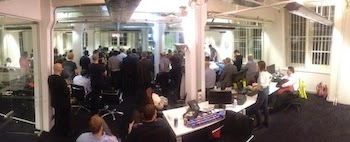
We weren’t entirely sure how much interest there would be in an event of this nature, given that TA is the highest level of certification and not necessarily something everyone would have in their career plan.  As it turned out, this event had one of the best turnouts I can remember, as this shot from the back of the room shows.

Ta2

The key points from the panel with regard to preparation for the board were:

  • Identify the key areas from the study guide and try to get yourself on projects that have requirements of this nature - e.g. integration, complex security and sharing, single sign on
  • Its an intense experience to remember to take a step back and breathe from time to time
  • This isn’t something that you can prepare for simply by studying - you need real world experience
  • Pre-sales work is useful preparation for being peppered with questions on a solution you have just thought of!

Related Posts

Wednesday, 5 November 2014

Musings of a Trailheader

Screen Shot 2014 11 02 at 16 09 03

Introduction

Trailhead is a new interactive learning initiative for Salesforce developers - you can read more about it at my introductory post, or on any of what seems like hundreds of write ups in the developer community blogosphere. Having been through all of the available exercises and had a couple of days to reflect, here are a few of my thoughts on the system and some ideas for maximising the awesomeness.

Challenges

Challenges and automated checking are going to be key factors in the success of this program. The Salesforce developer community are a competitive bunch, and anything involving badges and points gets a lot of interest.  With 1.8 million developers already using the platform and more signing up on a daily basis, there’s no way a manual system would be able to scale, and any delays would likely lead to user frustration.  I’d like to find out more about how this works - it looks like it purely relies on API access to the developer edition rather than any Salesforce-only under the hood stuff, but I’d also be interested to know if there’s a package or framework that allows pure configuration, or if each challenge requires coding from scratch. Maybe a topic for a future Developerforce blog post.

Challenges that rely on having completed the follow-along exercises in the unit would make sure that even experienced developers had been through all of the details, rather than skipping straight ahead to the challenge.

A leaderboard would be a cool addition to this. I’d be inclined to avoid a lifetime top 10 type of board, as once a couple of months have passed it would become all but impossible for new Trailheaders to appear on it.  Instead, something that shows the top scorers for the last month, or biggest increase in points in the last week etc would give everyone a chance to see their name up in lights. An awesome spin on this would be to segment based on developer group membership, which would allow us to recognise the top performers in our groups each time we get together.

Another idea, which I’m still in two minds about myself, is timed challenges.  In this scenario, accessing the detail of a challenge starts a timer and the number of points available drops down over time. This should encourage Trailheaders to read all of the related material to ensure they are fully prepared for the challenge before attempting it, although if the points drop too quickly it might be off-putting.

Build a Complete Application by Following a Trail

A trail whose units/modules combined to leave the Trailheader with a complete and functional application would be amazing.  I’m well aware that the amount of effort and attention to detail involved would be enormous. It would also need to cover a wide range of topics, although judicious use of code shares/unmanaged packages could get the basics in place quickly.

Organised Trailhead Events

This covers a couple of scenarios:

  • Trailhead content and challenges specifically (or initially) produced for Developer Group Events. For example, last year we had Salesforce1 Developer Week across the globe, with mini-hacks for participants. Tying this into a new trail would help to drive interest and attendance.
  • Elevate/Hands On Workshops run via Trailhead - having run one of the Hands On Workshops at Dreamforce, it seems to me that this would be a good fit for the format.
I also think the existing content would be great for “Intro to Force.com” type events and I’m thinking about how we can leverage this in the London Salesforce Developer Group.

Get the Community (More) Involved

Judging by the number of tweets/blog posts/Facebook shares, the developer community are already pretty taken with Trailhead, but that’s purely from a consumer standpoint. Rather than just suggesting topics it would be great if we could build trails/modules/units (most likely the latter, as it looks like there’s a huge amount of effort involved in a trail!). With attribution for the author on the item, I’m sure there would be a deluge of submissions! This would also allow related technologies to be introduced, such as working with JavaScript frameworks or Responsive Design.

To be fair, I’d be amazed if this wasn’t already being considered at some level. It probably won’t happen for a little while, as Trailhead is shiny and new and I’m sure that the Salesforce developer relations team are learning as much from this as the Trailheaders. 

That’s my thinking for now - I’m sure other ideas will occur to me, in which case I’ll update this post if and when then do.

Related Posts

Sunday, 5 October 2014

London Salesforce Admins - First Awesome Meetup

The inaugural meetup of the London Salesforce Admins community (with an excellent turnout for the first event) took place on Thursday 2nd October at Dotmailer’s London offices - a great space overlooking London Bridge and the River Thames.

After some welcome drinks and networking, Matt Morris kicked things off with a short talk on the format and content for the evening:

Mm

The first talk was a comprehensive look at the GA features of Winter 15 from Mike Gill:

Ag

after a short break for “refreshments” (beer!) and some more networking, we were back for Francis’ Five Minute Feature with Francis Pindar, showing how to create images using formula fields:

Fp

and finally on the formal talks, Winter 15 hidden gems from Chris Edwards, giving a heads up on some of the pilot/beta features in the new release that will hopefully make it to GA before too long:

Ce

The presenting side of the evening was then wrapped up with the Open Mike session (so called as its hosted by Mike Gill!), where anyone can step up and talk for a couple of minutes on a subject of their choosing. If you’ve been wanting to take the plunge in public speaking but have been nervous of a length session, this is a great way to get your feet wet.

I spoke to a number of people during the subsequent networking and the consensus was that the organisers have found a definite gap to fill - the Salsforce User Group is quite high level and user-oriented, while the London Salesforce Developers tends to be focused on code  rather than clicks. 

The next meetup is on Thursday November 6th, and will no doubt have some news and features from Dreamforce, so if you are working as (or want to work as) a Salesforce Adminstrator in the London area make sure to add it to your diary.

On a related note, the October meetup of the London Salesforce Developers has been cancelled as it was scheduled a little close to Dreamforce, but we’re back in November.

Friday, 1 August 2014

Why I Don't Provide One to One Help

(This is a post that I’ve been considering for some time, but has been pushed to the front of my ideas stack based on the increasing levels of attitude I’m encountering)

Help me Bob Buzzard. You’re my Only Hope

I’m typically asked for one to one help several times a day, especially weekends!  Sometimes its on the Developer Force forums, where a poster asks for my email address so that they can contact my directly with some related questions, other times its direct emails with a lengthy code sample asking for me to write the test case. Lately its direct messages when I login to Facebook, asking me to get in touch when I’m free to answer some questions on web services, Visualforce, Apex in general, as there's an urgent customer requirement.

Regardless of the mechanism chosen, I don’t respond (in fact, this used to be in my signature on the original Lithium Developerforce Discussion boards, although it didn’t stop anyone). There is a very good reason for this:

I’m a Consultant

I’m a consultant by profession, for BrightGen, a UK-based Salesforce Platinum Cloud Alliance partner. When you are a consultant, you sell your time at a rate based on your experience and expertise.  As I’m a Certified Salesforce Technical Architect (along with all the other certifications), I’m charged out at the highest rate, so when a customer wants one to one assistance from me, they have to pay a not inconsiderable sum.  It would therefore be extremely unfair on both my customers and my company if I started handing out my time for free, simply because people contacted me directly through social media or personal channels.

Unfair on my customers, as they would be the only ones that had to pay for the privilege and unfair on my company as I’d be depriving them of potential revenue.  This is particularly unfair on those parties when someone is asking for help on their customer engagement - they are expecting me to fix their problems for free, so that they can complete the work that they are charging their customer for.  You wouldn’t charge to fix someone’s car, then take it to another garage and expect them to do the work for free as you are a "newcomer to car maintenance".

Its Nothing Personal

If you ask me for one to one help, I won’t respond.  Don’t take this as a personal slight - I don’t have a secret club of those that I do help, everyone is treated the same. If I accept your LinkedIn connection or Facebook friend request, that doesn’t mean I’m now your point of escalation for any and all Salesforce problems, your personal career counsellor, or your private support service.

I used to respond saying I only did this as a paid gig, but that started taking up too much of my time, so now I treat these requests as unsolicited contacts and ignore them. I’m sure that all these requests are super-urgent and its absolutely vital that the problem is fixed, but remember that’s a subjective view - there’s no urgency from my side and it makes no difference to me if the problem remains in place for years.  .  

Post it to the Forums

Post your request on the Developerforce forums and I’ll help if I can - even better, lots of other people will also see the post and will do their best to help as well. This way the knowledge is spread throughout the community as a whole. If you post a question and then ask for direct contact details, what you are effectively saying is that you’d like to tap into the community knowledge, but keep the solution to yourself, which is pretty un-community minded.

I Know its a Minority

This post isn’t an attempt to drum up more business - I’m really not that interested in single day engagements to debug code or write unit tests these days.  Its also not a cry for validation. I know that the vast majority of people that I interact with in the community don’t behave like this, so there’s no need for any “I appreciate you, Bob” style comments!

If nothing else, this post gives me a URL to point people at when I’m not replying and they don’t understand why.

Sunday, 4 May 2014

Salesforce1 Developer Week London

In case you weren’t aware, Salesforce1 Developer Week took place at the end of April 2014 - in fact it seems to have been more than a week judging by the events on the official blog page.

The London event took place on 30th April, kindly hosted by TQuila at their headquarters in Lindsay Street.  Registrations took a bit of a hit when strike on the underground was announced to coincide with this, but on the day more than 50 people attended - an excellent effort.

After pizza and beers, the evening was kicked off with a presentation on possibilities of the Salesforce1 mobile application, from a configuration and programmatic perspective from myself and Richard Clark, CTO of Make Positive:

S1dwrc

  S1dwkb


 The attendees then retired to the main "cabin" of the office to crack on with the workbooks, mini-hacks or simply to solve some real-world problems they had been struggling with:

S1dwwork

From time to time the best practice discussions became heated :)

S1dwblows

but we were all friends again after an hour or so of hacking, and it was back to the presentation area to demonstrate what had been built:

S1dwdemo

Something that really stood out for me was the contrast with the Elevate mobile workshop that took place in London in March.  There, a fair amount of time was spent setting up the environment, especially for android development involving the emulator, and most people had to push hard to get through the workbook in a whole day.  This time around, everyone was up and running without incident, and my time as a helper was spent advising how business problems could be solved using the application.

If you were unable to attend a Salesforce1 Developer Week event, you can still try the workbook and hacks yourself using the following links:

Our next event takes place on Wednesday 14th May at the Appirio offices near Bond Street station. Christophe Coenraets, Salesforce Developer Envangelist, will be joining us for a talk on Angular.js and Ionic.  I’ve followed a lot of Christophe’s community activity at both Adobe and Salesforce.com and he’s done some interesting work, so I’m really looking forward to this.  You can signup for this event on the meetup page.

Monday, 21 April 2014

London Calling - Salesforce1 Developer Week

Keep calm it s gonna be totally awesome 54

Salesforce1 Developer Week is series of events taking place around the world between 27th April and 3rd May 2014. The London Salesforce Developer Group are hosting an event on 30th April from 5:30pm:

Screen Shot 2014 04 19 at 17 06 21

Right Side of the Tracks

In a groundbreaking move, we’ll be running two tracks for this event, both with a hands-on focus:

  • Beginner Track
    If you’ve never developed against the Salesforce1 platform before, attend beginner track. This covers the basics of creating an application via drag and drop; adding process automation, all without writing a single line of code.
    Having run a few “Introduction to Force.com” workshops, the most common feedback from attendees is they are amazed how quickly you can build applications when most of the heavy lifting is done by the platform.

  • Intermediate Track
    The intermediate track will introduce use of Visualforce in Salesforce1, among other items. This is the track for the “clicks not code” developer who is interested in taking the next step, as well as experienced developers from outside the Salesforce ecosystem who have covered the basics through attending an introductory workshop or completed the Force.com Workbook. Experienced developers should prepare themselves to write much less code than they are used to when creating custom applications – in Salesforce1 code is written to extend the existing platform functionality rather than building from the ground up.

Salesforce1 Team, Assemble

We’ve put a crack team of presenters and helpers for this event, including MVPs and a couple of Salesforce Certified Technical Architects, so regardless of your level of experience with Force.com (if any) there will be someone on hand who can help if you get stuck. This also gives rise to some excellent networking opportunities during and after the event.

There’s no Such Thing as a Free Lunch

But there is such a thing as a free event - all you need to bring is yourself and your laptop. There are also exclusive event T-shirts (while stocks last) and Salesforce1 books (again while stocks last). 

Its Five O’Clock Somewhere

Its actually 5:30 at Tquila HQ - its an early start to allow as much development time as possible.  Register for this event here. I look forward to seeing you.

Update 25/04/2013: the time has been moved to 6pm.

Saturday, 1 March 2014

London Salesforce Developers February Meetup

Sfdug

Along with a few others (Bay Area, Sydney) this week saw the February meetup of the London Salesforce Developer Group, kindly hosted by Make Positive at their London offices. Like our last meeting in January, this was a themed event and the theme was Salesforce1 - a hot topic at the moment in the Salesforce world, as evidenced by the 92 people that registered to attend.

First up we had Carolina Ruiz from Financial Force:

Cr

Carolina’s talk covered:

  • Using Publisher Actions in SF1 - micro moments - main features, overview, how do they fit in SF1
  • Notifications world in SF1
  • Other features of SF1
  • Mobile cards
  • Flexipages

Financial Force were involved in the beta for Salesforce1, so Carolina was able to share some insights into her experience developing against an early release of Salesforce1 and how it has evolved since then.  You can find the slides for this talk on slideshare here.

Next was me, on the topic of Salesforce1 for Visualforce developers.  

Kbldg

This was mainly about what doesn’t work and what not to do when adding Visualforce apps/pages to Salesforce1, and how to workaround problems that might be encountered.  The slide deck from my talk is on slideshare here. I’m planning a blog post to cover the topics in the slides with a little more explanation, so stay tuned.

The Developer Group next meets at Make Positive on March 26th 2014. If you are interested in joining us, you can join our meetup group at : 

http://www.meetup.com/LondonSalesforceDevelopers/

to find out more and be notified of upcoming events.

Saturday, 29 June 2013

Meetups and More

Meetup with Apex Product Managers

On 20th June the London Salesforce Developers welcomed Apex Product Managers Andrew Waite and Josh Kaplan to our Meetup at SkillsMatter. There was a real buzz of anticipation for this event and it didn't disappoint.  After a short run through of some of the Apex specific enhancements for the Summer 13 release, and a sneak peek at a pre-release version of the chatter mobile app, we then entered a no-holds barred Q&A session.  One issue with this sort of informal session is that it can descend into a forum to air grievances and bad experiences - although we flirted with this, in general we managed to maintain the positive vibe that we all had at the start of the meeting. Something I always enjoy when I have a chance to speak to the product managers is finding out which enhancements that I view as simple and can't understand why they aren't complete already are actually incredibly hard to do and require a complete overhaul of a section of the platform. 

After the event Andrew and Josh joined us for our traditional post-meetup drinks, where we were able to continue pitching our ideas, as well as shooting the breeze about Apex, Force.com and Salesforce in particular.

The session was recorded by the good folks at SkillsMatter and is available to watch here.

If you aren't already a member of the Salesforce London Developers Meetup group, you can join via the meetup site.

Second Introduction to Force.com Workshop

After the success of the first Introduction to Force.com workshop in April, we ran another one of these on 25th June, led by myself with hosting and assistance from John Stevenson (@jr0cket), one of the Salesforce Developer Evangelists here in the UK.

The format was broadly the same as before - get a group of people keen to learn about Force.com together at Salesforce offices and go through the Force.com workbook as a group, with hopefully useful tips and advice from the hosts as the evening progresses.  April Nassi, Developer Program Manager at Salesforce, sent us through a pack of hardcopy workbooks and cheat sheets which were a useful addition - not only does it give the attendees something to take away, it meant that those who were struggling a little could catch up at their own pace by following the instructions in the book when we took a break at the end of each chapter. April also sent through some schwag so some of the attendees went away with new Force.com wear.

We'll be running more of these workshops in the future, so keep an eye on the meetup group for the next one - if you'd like to help out or host one, let us know.


Sunday, 3 February 2013

Improved Force.com Discussion Boards

This week saw a welcome revamp of the Force.com discussion boards.  There's been quite a bit of debate recently about the relative merits of the discussion boards versus the Salesforce Stack Exchange beta site.  Personally, I think there's room for both as they serve different purposes.  I also think that the more channels for the community to work together the better - for one to succeed there's no reason that others have to fail.  I realise that this is an area of religious wars for some people, so bear in mind that this post represents my opinions on this - if you disagree, there's nothing stopping you writing up your own post!

My thoughts of some of the strengths and weaknesses of these sites are as follows:

  • Gamification.  
    This is an area where Stack Exchange is very strong.  There's a plethora of badges that can be earned, each user has a reputation score based on up or down votes for questions and answers, answers marked as accepted etc.  Another interesting ranking is a user's acceptance rate.  This indicates how often a user is accepting answers, and a low score indicates they are asking for a lot of help but not marking answers solved for the benefits of others.  The Force.com boards, by contrast, have previously ranked users by the number of posts that they have made - e.g. 150 for Trusted Contributor and topping out at 500 for Super Contributor.  Where this is lacking is rating the quality of posts - I've seen at least one instance in the past where a user has earned Trusted Contributor by making 150 'please write my test case' style posts.  This is an area where the revamp has improved matters through the introduction of kudos - you can read about how this works in detail at the developer relations blog post.  What matters though, is the leader board is now focused on kudos rather than tags, which should lead to a lot less meaningless tags on messages.
     
  • Participation.
    This is an area where the Force.com boards win hands down - the number of users and volume of posts far exceeds the Stack Exchange site.  Of course boards have the advantage that they've been around longer, but I feel there is more to it than this, as I'll cover in my next point.  The quality of the posts on the boards is hugely variable though, whereas the up/down voting system on Stack Exchange tends to ensure that the quality of posts is high - users can also vote for questions to be closed if they feel they are asking for help with homework, could be answered by a simple search etc.
     
  • Support for Newbies.
    This is likely to be my most contentious point.  I don't think that Stack Exchange is a good place to go for help if you are starting out with Force.com.  Its good for advanced users who have hit a roadblock, researched the problem and been unable to find a solution. Its also reasonably good for intermediates who know there is a specific problem with their code but can't figure out exactly where its going wrong.  Where it really falls down is for those who don't know where to start.  Post up a question asking for basic, generic help and you'll be down voted and closed very quickly. There's also a touch of mob mentality or swarming about this - questions can be quickly hammered down, but the voting up doesn't seem to happen with the same pace.  The boards are much more tolerant of beginner questions - sometimes there are pages of responses attempting to get to the bottom of what the problem actually is before even attempting to solve it.  In case you think I'm being too hard on Stack Exchange, the format doesn't really support this kind of question discovery, so I can understand why some questions are treated in this way.  I often describe the boards as the place to ask bad questions, or a home for those who don't know what they don't know.
     
  • Existing answers.
    This is another area where Stack Exchange cannot hope to compete, due to the amount of time that the boards have been around.  You'll probably have to work a little harder to find answers to esoteric questions on the boards, due to the variable quality of the posts, but there are tens of thousands of solutions in there.  In fact, I'd lay money that before posting on Stack Exchange most, if not all, users will have searched the discussion boards. And to be fair and equitable, if they've done that research before posting on Stack Exchange their question will be upvoted and answered.

Reading the above, you might think that I'm not a fan of Stack Exchange - in fact, nothing could be further from the truth, I'm on it most days and I'm in the top 5 for reputation.  There's a place for both sites and, while there is some overlap, they generally serve different purposes.  That said, I do prefer the discussion boards - partly as I have four years history with them, but mainly because I'm interested in getting people started on the platform and improving beginners. 

But enough about how the boards fit into the wider landscape, the important point is that they are getting some love, having been left to fend for themselves for a while  Its great that the board owners are doing this, but there are plenty of things that we participants can do to improve things.  To that end, here's some of my thoughts on board etiquette:

  • If you post a question and you get a solution, mark it.  
    It can be disheartening to put hours of effort into drilling down to find the actual problem and coming up with a solution, only to find the original poster then moves on to their next question without a backward glance.  It also means that another user researching a similar problem doesn't know that there's a solution somewhere in the thread.

  • Don't beg for marks in your signature.
    Having said that you should always mark solutions, I can see why some people don't.  If I posted a question and every response, even a 'tell me more', demanded that it be marked as the solution, I'd start to tune out the whole solution side of it.

  • Don't just post up requirements.
    Its fair enough to post up a question asking how to get started with a particular piece of functionality (e.g. how can I submit a form via javascript), but if you are copying and pasting your requirements/homework, (e.g. 'I have to build a system that manages projects') , your post is likely to remain alone with zero responses. My response to these is often 'good luck' or 'thanks for keeping us in the loop'!

  • Have a go first.
    If you have any idea where to start, have a stab.  Nobody gets flamed for posting bad or incomplete code.  It shows that you are trying to help yourself and, certainly in my case, is likely to make people want to help you.

  • Don't post pages of code.
    If you do this, really what you are saying is 'figure out my code and tell me what is wrong with it', which is a big ask.  Try to narrow down where you think the problem is and post discrete section.

  • Post some code!
    You have to give us a chance!  If you post up that you are getting a null pointer exception with no context and no code, its highly unlikely you'll get a solution.  If an error points to a particular line of code, there's no excuse for not posting it.

  • Don't contact helpful people directly
    If someone is knowledgeable and solves a few problems for you, don't ask for direct contact details.  Essentially what you are saying there is you'd like free, private support from them when it suits you.  Most of us on the boards have day jobs where we charge people for our skills and experience, so you have the option to pay for an engagement if you need a personal service.  Receiving message after message asking for "a way to get hold of you so we don't have to wait" can quickly become irritating,

  • Don't send questions in private messages.
    Think about what you are doing here - you've taken advantage of the community to find someone knowledgeable, but then you don't want the discussion to be public to help others.  I don't even respond to these messages any more I'm afraid, as I get so many of them.
     
  • Don't use it as your blog.
    Every now and then we'll get some blog posts under the guise of discussion posts.  I can see why people do this, as it gives a blog a huge, unearned audience.  The home for these is Developerforce, which accepts blog posts and code recipes from the community. 

  • Be polite.
    If you think a question or response is bad, there's no reason to be rude.  This is, thankfully, very rare on the boards.  Its always worth restating though, as the negative effects can be significant - I've been involved with some communities  where its felt like there was active effort to discourage anyone apart from experts from posting, and to do this in a particularly unpleasant manner.  If you think the question is bad, try to find out what the user is trying to ask.  If you think an answer contains bad advice, frame your criticism with the correct solution - remember, you might be wrong and they might be right!

  • Get (more) involved.
    Most of the above are about what not to do.  If none of those apply, keep doing what you are doing, but do more of it.  If you are relatively new to the platform but starting to get the hang of it, start posting answers - nobody will jump on you if you make a mistake.

We have a great community, so lets do all we can to grow and improve it for everyone.


Monday, 14 May 2012

Cloudstock London 2012


In an unexpected turn of events, I'm going to be presenting a community session at Cloudstock London 2012.  Unexpected as I hadn't planned on this, but a slot came open at the last minute and I agreed to fill in.

The upside to this is that I didn't have much time to think about what I was committing to.  The downside was that I had to decide on my topic and produce a description in a few hours.  What to speak about then?   It had to be something I was familiar with that wouldn't take a huge amount of time to prepare, as Cloudstock was just over a week away.  Looking at the list of existing community sessions, there was a theme of deep dives into specific technical areas - @wesnolte on Javascript Remoting and MVC Frameworks for example, or @pbatisson on Advanced Force.com Testing Techniques.

It struck me that there was an opportunity here to reach those attendees with little or no experience of Force.com, or those with some experience looking to progress.  There was already a breakout session introducing the Force.com platform, so there was little point in a session with the same technical angle.  Therefore I decided to look at this from a different perspective, and cover starting out as a Force.com developer, what employers are looking for and career progression.

This seemed like a good starting point, but unlikely to fill a 30 minute session unless I spoke very slowly! As followers of this blog know, if there's one thing I'm pretty familiar with that's Salesforce.com Certification. Most Salesforce/Force.com careers will involve gaining certifications - its certainly a key metric for Cloud Alliance Partners - so I'll be talking about the benefits, what the exams involve and how to prepare.  Since I gained the Technical Architect accreditation I've had a lot of interest in the exam, particularly the Review Board, so I'll be covering that too and expecting questions!

So if you are thinking about a job in Force.com development, or looking to gain recognition and advance your career through Certification, join me at Cloudstock from 12:30 to 1pm to find out more.